Learning through play: discovering the ALEXX SkyRider™ route
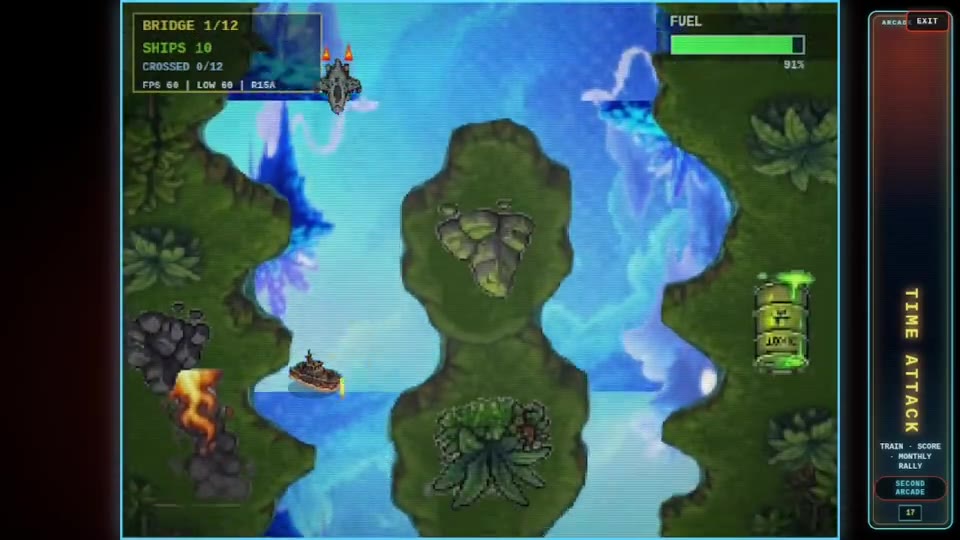
Knowing the fire button resolves an instruction. Choosing when to use it while the ship approaches a passage requires another kind of experience. In ALEXX SkyRider™, the distance between recognizing an action and applying it within the route forms part of the learning proposition described by its creator.
The Journal recounts Alejandro’s intention to let players observe, try, and discover relationships during a run. Control explanations provide the entry point. The route presents situations in which those controls need to be combined with position, speed, and resources.
WHAT THE INSTRUCTION LEAVES OPEN
An instruction can explain how to brake. The present situation reveals what changes when doing so: how much time remains to prepare the ship, which threat keeps moving, and which passage needs resolving. The rule stays recognizable while its application depends on the scene.
Something similar happens when firing. Identifying a target does not remove the need to maintain a trajectory. Players may discover that an attack and a lateral correction share the same approach without serving the same purpose.
These relationships expand what it means to learn the game. Instructions remain useful; experience places them within decisions that have visible consequences.
DISTINGUISHING CONTACTS AND CONSEQUENCES
The route also requires reading objects. Contact with threats and obstacles should be avoided, while Fuel is collected on contact and restores energy. TNT causes an explosion and costs one life. Recognizing the object distinguishes contact that restores energy from contact that causes a loss.
Learning includes recognizing which event corresponds to each object. Some barrels reveal themselves as TNT when approached, according to the Journal. Information appearing during a maneuver can change the necessary response and give a correction its purpose.
The bridge provides another sequence: attack, destroy, and cross. The checkpoint is established by crossing. Understanding that condition distinguishes resolving the target from progress actually recognized by the game.
FROM ONE ATTEMPT TO THE NEXT
A later run may begin with a learned reference. Players recognize an area or remember a difficult approach, but still need to watch the current situation. Their entry position and the threats present may require another response.
If a collision occurs, the observable fact is the result. Its cause requires examining the sequence: trajectory, available information, and the correction performed. Immediately attributing it to inattention would overlook possibilities that the image alone cannot resolve.
Alejandro presents Time Attack as a place to practice piloting. That interpretation connects with learning controls also used in Arcade Principal. The mode retains its clock-based challenge and offers another way to observe decisions along the route.
In ALEXX SkyRider™, discovering the route means connecting what is known with what appears on screen. Explanations make starting possible; each attempt provides situations that can be understood, reviewed, and approached differently.