1942: finding a way through the shots
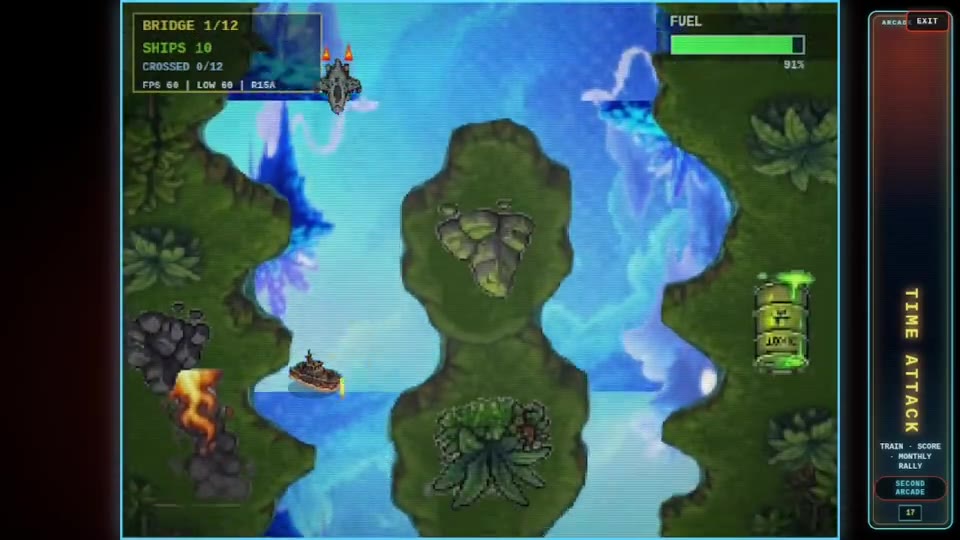
The sky has routes of its own
In a shooting game, watching the enemy seems like the first obligation. Survival, however, also depends on something less obvious: noticing the space that remains open. A screen can be full of movement and still contain a way out. Recognizing it in time makes the ship's position a decision as important as firing.
1942 belongs to the arcade games Capcom released in 1984. [A1] Its vertical aerial combat provides a starting point for examining the relationship between attack and evasion. The concern here is less a catalogue of enemies than a specific task for the player: finding where to continue as the situation changes.
A maneuver that deserves consideration
The manual distinguishes firing from the loop maneuver and shows its available uses on screen. Retaining them until the return to the aircraft carrier contributes to a bonus, and one POW adds a use. [A2] The reserve is limited, although it can change during the run.
That reserve introduces a question beyond pressing a button: when is a special escape worth using? Spending it too early can leave fewer alternatives for another situation; holding onto it without considering the danger is not, by itself, a good decision either.
This tension can be interpreted as a distinction between having a tool and choosing its moment. The article does not attempt to establish a universal rule for using it. Its purpose is to show how a limited capability makes the cost of each choice visible.
Reading the space that remains
To examine a combat scene, it helps to distinguish three things: the current position, the movement of threats, and the space available for movement. Watching only the nearest projectile may hide a wider escape route. Watching only one enemy may leave another danger entering the same area unnoticed.
This is a proposed way of reading a scene, not a guarantee of victory. It helps explain why a quick reaction and a useful decision are not always the same thing. Movement makes sense when it leads somewhere that leaves room for the next action.
The connection with ALEXX SkyRider™
In the first ALEXX SkyRider™, reading the environment centers on a downward route. The player must anticipate the space the ship will pass through and adjust its position. Speed control also changes the time available to process the next section, according to the project's documentation.
That difference makes the comparison useful. 1942 provides a way to study when to use a maneuver with limited availability; ALEXX SkyRider™ provides a way to study how to prepare a route and manage reaction time. Neither Capcom's loop maneuver nor its POW system is attributed to Alejandro's game.
Their shared point is the need to find a response within a changing space. Survival does not consist solely of eliminating whatever appears ahead: it also requires recognizing where the ship can be after the action. That question turns an apparently immediate fight into a continuing reading of the route.