Shooting and navigating: two tasks the pilot must coordinate
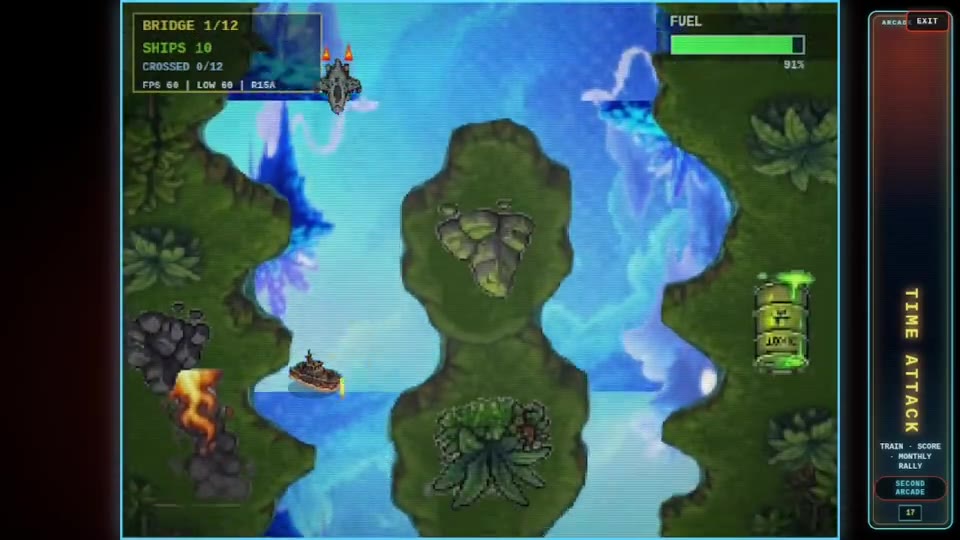
A successful shot does not necessarily finish the maneuver
The shot reaches its target. The threat disappears, but the ship still needs a position from which to continue. That hypothetical scene distinguishes two results that often occur close together: dealing with a target and completing a maneuver.
In a shooter built around a route, combat and navigation can coincide without being the same task. An attack acts on a target; movement changes the vehicle's relationship with space. Interpreting a situation requires recognizing which part of the problem each action addresses.
The distinction does not suggest choosing only one of them. A player may move while firing. What changes is how the outcome is evaluated: removing something does not, by itself, demonstrate that a way forward has been prepared.
Identify the problem before repeating the response
A destructible target presents an attacking opportunity. A narrow passage presents a positioning need. Approaching too quickly may require reconsidering the pace, if the game provides that control. These are examples of reading a situation, not a list of rules shared by every shooter.
Difficulty arises when a response is maintained after it stops addressing the situation. Continued firing may be insufficient if getting into position is urgent. Moving without considering a necessary target can also leave a condition for progress unresolved.
One way to organize the decision is to recognize the immediate need and the action that prepares the continuation:
| Observed need | A useful question for the pilot | |---|---| | Deal with a target | What does the attack make possible? | | Reach an available space | Which position does the ship need? | | Prepare the approach | Does the pace allow the maneuver to be completed? | | Continue after acting | Which condition still needs to be fulfilled? |
These questions do not establish a compulsory sequence of button presses. They distinguish tasks that may be performed together and help prevent one result from taking all the attention.
Coordination means more than reacting twice
Coordination begins before a situation becomes urgent. If an action opens a passage, the player can also prepare the position from which to use it. If a maneuver changes the line of attack, it helps to consider which target will remain relevant after moving.
The interest lies in the relationship between actions. It does not assume that everything can be destroyed or that every danger can be solved by dodging. Each game's rules determine which responses are available. Learning them allows more precise choices rather than repeating a familiar reaction to different problems.
This reading also avoids confusing activity with progress. Pressing buttons and moving frequently does not, by itself, explain what has been achieved. A maneuver can be examined through its outcome: whether it addresses the present need and leaves a viable condition for continuing.
The ALEXX SkyRider™ bridge: attack, then cross
The first ALEXX SkyRider™'s guide offers a concrete example. To continue, the pilot must attack the bridge, destroy it, and cross it. The checkpoint is established upon crossing. [P1] The attack and passage along the route belong to the same progression, but perform different functions.
The approach can prepare both tasks: maintain a useful line for attacking and a position from which to complete the passage. Resolving the target opens the way forward, but the ship still needs to travel through it. The attack’s result gains meaning within that sequence.
This example links the general decision to a rule specific to the arcade. Along the downward vertical route, the pilot needs to recognize both what must be resolved and the space through which the ship will continue. The question is no longer simply whether the shot hit. It also matters whether the ship is prepared to complete what that successful shot makes possible.
Sources
- P1: Project documentation — Portal