Learning before mastering: different ways to practise in retro games
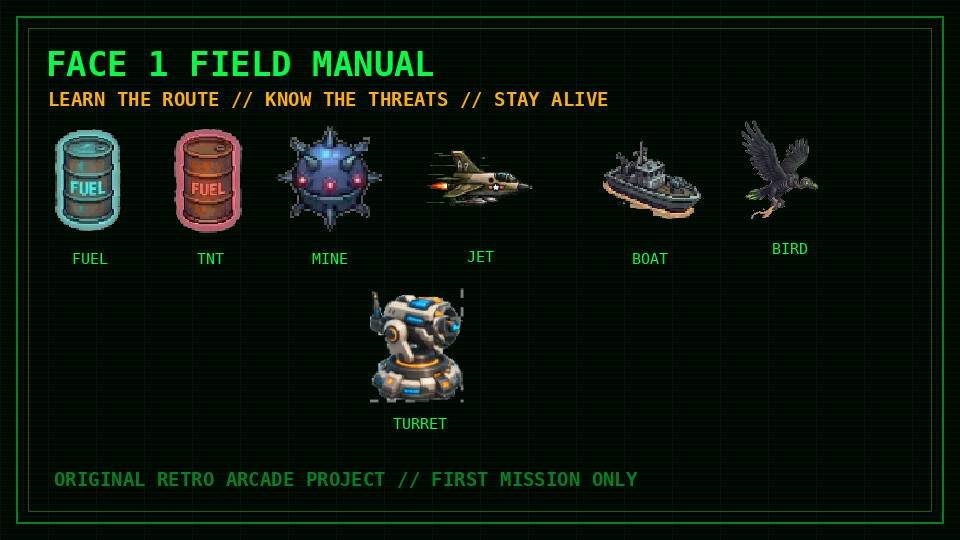
A run can end before a player understands what went wrong. Perhaps an obstacle was recognised too late, a button was confused with another, or a manoeuvre was attempted without knowing its reach. Starting again offers another attempt, but may also require replaying everything between the player and that difficulty. A practice space changes the relationship between repetition and learning.
Video game history includes examples of training separated from the main adventure. They do not follow a single formula: some introduce controls, others enable experimentation, and others isolate a challenge that also appears within a longer run. Examining these differences is more useful than treating every alternative mode as the same kind of training.
Getting to know a craft
The Star Fox 64 manual distinguishes the main game from Training. It recommends the latter to first-time players as a way to become familiar with the Arwing by following on-screen instructions. Training has its own menu option and exit command. Learning the craft therefore receives a space separate from the adventure. [D51a]
The design lesson can be expressed without promising outcomes: a dedicated mode allows attention to focus on a specific task. It does not ensure that everyone learns at the same pace or remove the need to practise within the main game later.
Experimenting and repeating a challenge
The Nintendo 64 Super Smash Bros. manual documents Training Mode, with character, opponent and stage selection, plus adjustable opponent behaviour and game speed. It also includes Bonus 1 and Bonus 2 Practice, which let players repeat the single-player game's bonus challenges separately while pursuing a better time. One title therefore offers both experimentation and practice of specific tasks. [D51b]
The distinction matters. Experimenting with adjustable conditions supports observation of an action. Repeating a defined challenge serves another purpose: trying to complete a familiar task more effectively. Both may support learning without working in the same way.
Practising within a challenge
A race against the clock is not automatically equivalent to a training room. A timer can create pressure, and the player still has a competitive or personal objective. Yet the challenge can also be used to rehearse decisions, identify recurring mistakes and compare individual attempts.
This distinction helps explain Time Attack in ALEXX SkyRider™. Alejandro, the creator responsible for creative direction, also sees it as an opportunity to practise. The mode provides another reason to repeat the route: alongside pursuing a result, players can focus on a decision they want to understand more clearly.
Here, practice does not mean stepping outside a challenge. Players can focus on speed control, their chosen path or when they recognise danger, while the clock remains part of the run. It is best described as a mode that can be used for practice, without confusing it with an environment free from time pressure.
A session might focus on a simple objective: recognising obstacles earlier, choosing a more deliberate trajectory or examining when to accelerate. This is a suggested way to play, not a guarantee of improvement or an additional feature the game must automatically track.
ALEXX SkyRider™ therefore joins a wider discussion about giving players reasons to return. Returning can mean pursuing a better result, but also understanding a decision that previously seemed accidental. Time Attack's interest lies in allowing the same challenge to serve a different purpose depending on what a player wants to work on.
Sources
- D51a: m1.nintendo.net
- D51b: manuals.plus