Fuel versus TNT: survival means making decisions
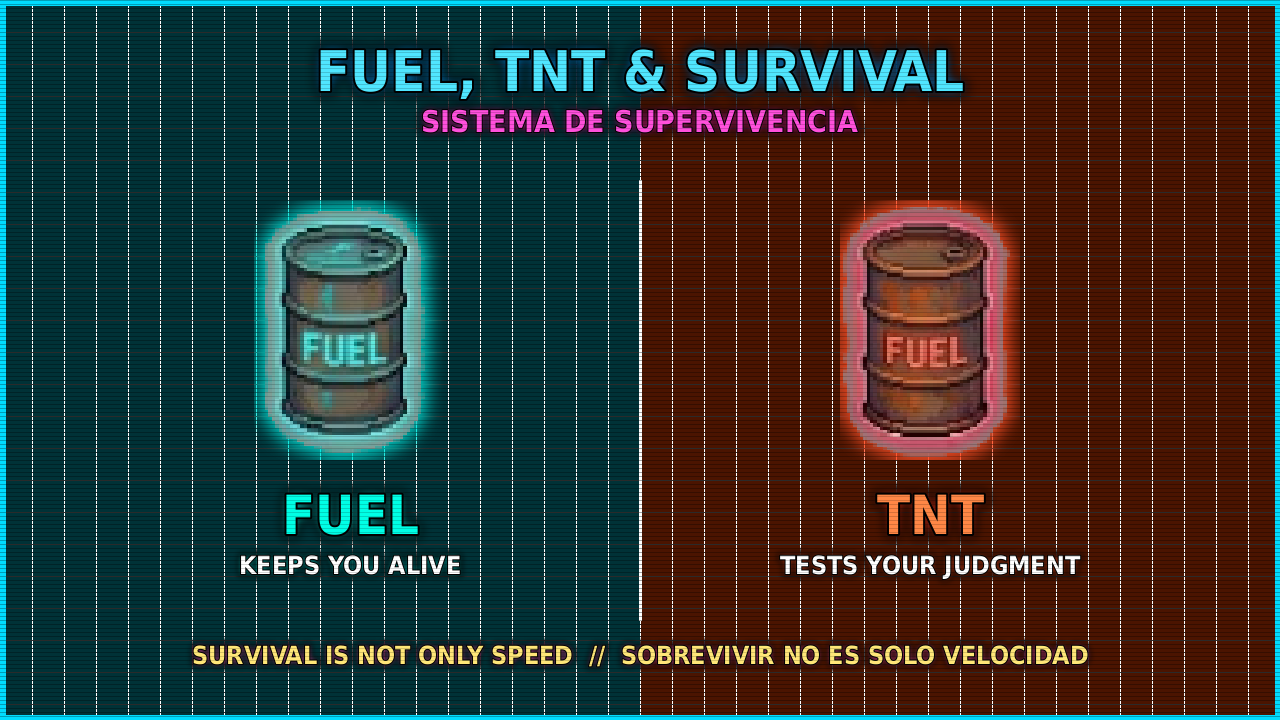
The ship needs energy, and a barrel appears on the route. The opportunity seems straightforward until the pilot connects the object with the ship’s position and nearby threats. In ALEXX SkyRider™, Fuel and TNT make that encounter demand attention: contact can restore energy or cost a ship, depending on the object.
The Gate identifies blue Fuel as a resource that restores energy on contact. Red TNT has a different consequence: touching it causes an explosion and costs one life. These rules distinguish two events that may occur within a similar approach. Recognizing which object is present forms part of piloting.
A RESOURCE THAT CHANGES THE TRAJECTORY
Fuel matters because the ship needs to maintain energy to continue. Its appearance introduces an opportunity to recover, but reaching it may require a change of position. The decision must connect the need for energy with the space available to make that movement.
A hypothetical example is Fuel positioned toward one side while the ship approaches from the other. The object retains its benefit; what needs assessment is the movement connecting it with the player. Obstacles and threats may change whether the approach is worthwhile.
The energy indicator provides another part of the information. An opportunity is interpreted differently when there is room to continue than when the reserve is under pressure. The resource gains meaning within the current situation, rather than simply through being visible.
WHEN THE BARREL REVEALS ANOTHER CONDITION
The Journal describes barrels that reveal themselves as TNT as the player approaches. Available information can change during a maneuver. A player who has begun an approach needs to interpret the object again and decide how to respond to its visible state.
This change distinguishes TNT from a danger known from the first moment. An action already under way may need to be abandoned or corrected. Keeping attention on the route makes it possible to observe which alternatives remain available when the expectation changes.
The contact rule needs to be clear: Fuel is collected; TNT is avoided. Saying the ship should not collide with threats does not mean forbidding all contact with objects in the game. The difference between resource and danger is an essential part of the instructions.
SPEED DURING THE APPROACH
Braking may provide more time to observe the object and prepare a trajectory. Accelerating changes that margin. Neither action replaces identifying the barrel or reading what occupies the path.
It is also useful to remember that firing and collecting serve different functions. Recognizing an energy opportunity does not remove the need to attend to an enemy. Pilots divide their attention between objects with different consequences within the same scene.
In ALEXX SkyRider™, Fuel and TNT connect resources with navigation. Their interest lies in how an energy decision becomes an actual maneuver, exposed to information appearing along the route. Understanding their rules makes it possible to evaluate the opportunity while keeping sight of what the ship needs to do to continue.