Keyboard, gamepad and arcade joystick: three ways to experience the same game
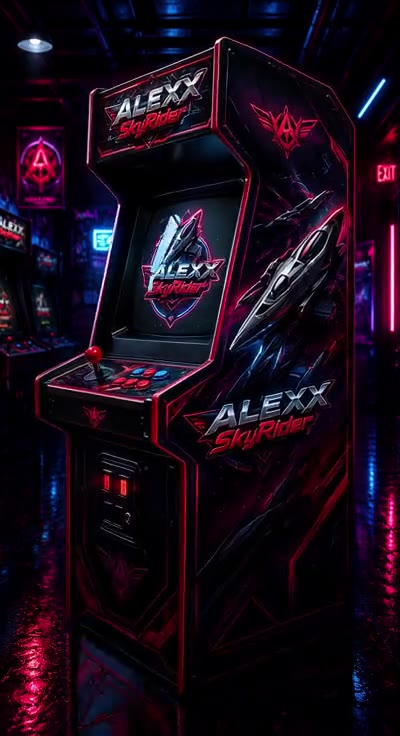
Alejandro tested ALEXX SkyRider™ with a keyboard, gamepad, and arcade-style joystick. In the Journal, that experience is presented through a question different from compatibility: what changes in the feeling of play when the controller changes?
The route retains its rules while the hands interact with another arrangement of inputs. Moving, firing, accelerating, and braking require gestures that may feel familiar or new depending on each player’s experience. The creator’s account makes it possible to examine this physical dimension without ranking peripherals by performance.
THE KEYBOARD AS DIRECT ACCESS
On a computer with a keyboard, the game’s actions can be used without adding a controller. The original article highlights that availability as part of the direct access the project seeks. This option retains a practical role: starting with a form of input already present on the computer.
The relationship with the keyboard also involves recognizing the assignments. Once the keys for movement, firing, and speed are identified, players can combine those actions along the route. That arrangement turns a familiar computer peripheral into the means of expressing piloting decisions.
THE GAMEPAD AND HAND POSITION
A gamepad brings inputs together in a device held with both hands. The Journal documents controller tests, including Xbox-style and USB controllers. Alejandro describes that arrangement as another way to experience the same arcade actions.
A general controller family name does not confirm the operation of every model or button. The record’s value lies in preserving an actual experience. When a specific assignment needs explanation, it must correspond to the controller and game actually used.
THE STICK AS A PHYSICAL MEMORY
The arcade-style joystick produced a particular impression on the creator: it strengthened his sense of nostalgia. The connection with the past also came from taking hold of a stick and pressing buttons, alongside the project’s graphics and sounds.
This observation expands the origin story of ALEXX SkyRider™. Part of its retro identity connects with a way of participating in the game. The reaction described belongs to Alejandro; others may have different memories or discover that form of control for the first time.
PREFERENCE AND RESPONSE
An enjoyable impression and a better record are different results. The Journal does not provide a timed comparison or latency measurement that would rank these controls by performance. Preference retains value as a personal experience without needing to become a demonstrated technical advantage.
The practical check remains whether the necessary inputs produce recognizable responses during the route. When that happens in the tested configuration, players can explore which arrangement feels more natural for expressing their decisions.
In ALEXX SkyRider™, the keyboard, gamepad, and joystick offer different physical relationships with a shared proposition. For its creator, testing revealed both immediate access and a nostalgic connection. The controller gives character to the session while the challenge continues along the route the ship must travel.