Varying encounters while keeping them clear: the familiar helps players read the new
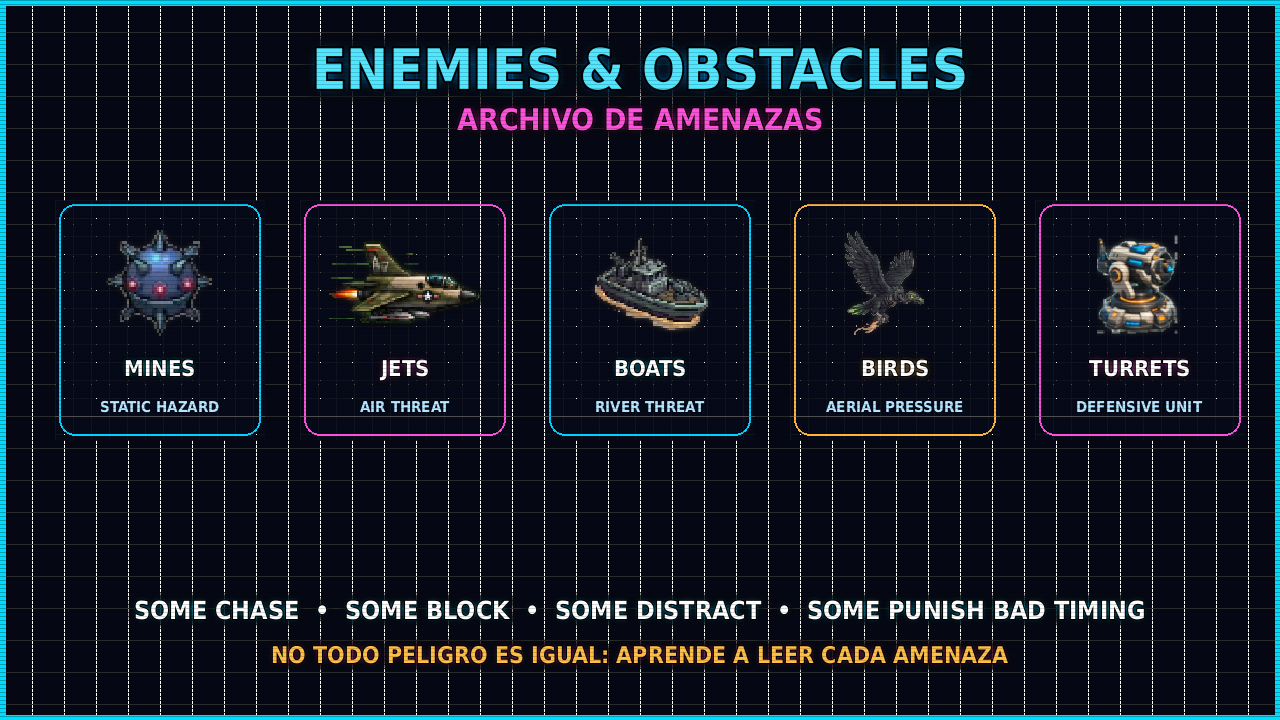
Variety needs references
Two sections can feel different while still belonging to the same game. Examining that relationship requires distinguishing changes in presentation, changes in the encounter, and the information retained for interpreting both.
Visual variety and variation in situations are separate matters. A figure may acquire another appearance without establishing completely new behavior. A familiar threat may appear in another situation without changing the environment's identity.
Families across the Faces
The ALEXX SkyRider™ Gate describes recurring threat families whose artwork can vary between Faces. Air patrols and moving boats form part of that explanation. [D39a] This organization connects visual continuity with environmental differences without claiming identical responses from every enemy.
From an editorial design perspective, a family provides a reference: players can begin relating a new presentation to something previously observed. That relationship still needs checking within the encounter. Recognizing appearance does not replace observing position, movement, and available space.
Moving boats provide an example of that continuity: the Gate presents them as route-related threats whose artwork changes between Faces. [D39a] The new appearance places the boat in another environment; during the approach, the pilot still needs to observe its location and movement relative to the ship.
Change a condition, retain a question
In the Arcade Principal Snow / Arctic demo, the code introduces variation into the intervals that schedule aircraft appearances. [D39b] That timing variation is different from changing their artwork. An approach may require attention to when the threat arrives, alongside recognizing its figure and observing the available space.
When examining clarity, ask what the pilot can recognize as an encounter changes. A situation's description should retain observable references: the ship, the visible trajectory, and space still available for use. Variation is better understood by explaining its effect on those relationships.
If a difference seems confusing during review, record which information was missing: distinguishing the object, recognizing its movement, or understanding the response needed. These are questions for assessing a scene, not conclusions from a user study.
Continuity in ALEXX SkyRider™
In the first ALEXX SkyRider™, Faces have their own visual identities and share recurring threat families. [D39a] That connection allows changes of environment while retaining elements players can examine again.
Variety's interest is not limited to adding figures. It can be studied through a concrete question: which new situation does the section present, and which references make it understandable? That reading connects the arcade's personality with the experience of the pilot returning to play.